In today’s fast-moving digital world, traditional advertising alone is no longer enough to attract and retain customers. People ignore intrusive ads, skip commercials, and block pop-ups. This shift in consumer behaviour has given rise to a powerful strategy known as content marketing. Rather than pushing products directly, content marketing focuses on creating value, building trust, and nurturing long-term relationships with audiences.
What Is Content Marketing?
Content marketing is a strategic marketing approach that involves creating, publishing, and distributing valuable, relevant, and consistent content to attract and engage a clearly defined audience. The ultimate goal is to drive profitable customer action by educating, informing, or entertaining users instead of directly selling to them.
Content marketing is not about promotion—it is about providing solutions. When brands consistently deliver meaningful content, they become trusted sources of information, making it easier for customers to choose them when they are ready to buy. The Core Purpose of Content Marketing The main purpose of content marketing is to connect with audiences at every stage of the buyer’s journey. Whether a user is searching for information, comparing options, or making a final decision, content helps guide them naturally.
Key objectives include:
• Building brand awareness
• Educating potential customers
• Establishing authority and credibility
• Improving search engine visibility
• Generating quality leads
• Encouraging customer loyalty
Instead of interrupting users, content marketing meets them where they already are—on search engines, social media platforms, and websites.
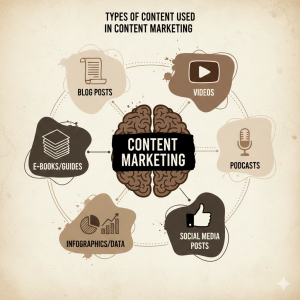
Types of Content Used in Content Marketing Content marketing uses various formats to communicate effectively with different audiences. Each type serves a unique purpose and addresses different user preferences.
1. Blog Content
Blogs are the foundation of content marketing. They help answer questions, explain topics in detail, and improve search engine rankings through keyword optimization.
2. Visual Content
Images, infographics, and visual guides make complex information easier to understand. Visual content improves engagement and increases content shareability.
3. Video Content
Videos are highly engaging and ideal for storytelling, tutorials, product demonstrations, and brand messages. They help create emotional connections with audiences.
4. Social Media Content
Social media posts, reels, stories, and carousels help brands interact directly with their audience and distribute content widely.
5. Email Content
Email newsletters, campaigns, and automated sequences nurture leads and maintain ongoing communication with customers.
6. Long-Form Content
E-books, whitepapers, case studies, and reports establish authority and are often used for lead generation.
How Content Marketing Works Content marketing follows a structured process that ensures effectiveness and consistency.
1. Audience Research – Understanding who the audience is, what problems they face, and what content they need.
2. Content Planning – Creating a content calendar aligned with business goals.
3. Content Creation – Producing high-quality, original, and informative content.
4. Content Distribution – Sharing content through websites, search engines, email, and social platforms.
This cycle helps brands continuously improve and deliver better value to their audience.
Importance of Content Marketing in Digital Marketing
Content marketing plays a central role in modern digital marketing strategies because it supports nearly every online channel.
1. Builds Trust and Credibility
When brands consistently publish helpful content, audiences begin to trust their expertise. Trust leads to stronger relationships and higher conversions.
2. Improves Search Engine Rankings
Search engines reward websites that publish fresh, relevant, and informative content. Quality content helps improve organic visibility and website traffic.
3. Supports Lead Generation
Educational content attracts users who are genuinely interested. These users are more likely to become qualified leads and paying customers.
4. Cost-Effective Marketing
Compared to traditional advertising, content marketing delivers long-term results with lower costs. A single blog post can generate traffic and leads for years.
5. Enhances Customer Experience
Content helps customers make informed decisions, reducing confusion and increasing satisfaction.
Content Marketing vs Traditional Marketing Traditional marketing focuses on direct selling through ads, promotions, and interruptions. Content marketing, on the other hand, focuses on value creation.
Traditional Marketing Pushes products Short-term impact One-way communication Expensive campaigns
Content Marketing
Educates audiences
Long-term value
Two-way engagement
Cost-effective strategy
This shift reflects how modern consumers prefer brands that help rather than sell aggressively.
Role of Content Marketing in Brand Building Content marketing shapes a brand’s identity and voice. Consistent messaging helps create recognition and emotional connections. Over time, audiences associate the brand with reliability, expertise, and authenticity.
Strong content strategies turn brands into thought leaders within their industry, making them the first choice when customers need solutions.
However, with proper planning, creativity, and data-driven decisions, these challenges can be overcome successfully.
The Future of Content Marketing The future of content marketing is focused on personalization, storytelling, and interactive experiences. As technology evolves, brands will rely more on data insights, artificial intelligence, and user-centric content to stay relevant.
Quality, authenticity, and value will remain the foundation of successful content marketing strategies.
Conclusion
Content marketing is more than just creating content—it is about building relationships through value. By educating, informing, and engaging audiences, businesses can earn trust, increase visibility, and drive sustainable growth. In a digital world filled with noise, content marketing stands out as a meaningful and effective approach that benefits both brands and consumers.
When done right, content marketing doesn’t just promote a business—it creates a lasting impact.